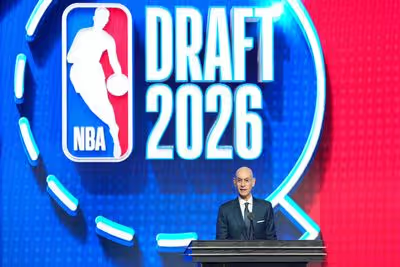
AJ Dybantsa went No. 1 to the Washington Wizards as the 2026 NBA Draft’s opening night delivered a torrent of trades that reshaped lottery and mid-first-round rosters. Several franchises — notably Memphis, Oklahoma City, San Antonio, Milwaukee and the Knicks/Lakers axis — engineered moves that will alter draft boards, depth charts and development timelines across the league.
2026 NBA Draft — Round 1 recap
AJ Dybantsa headlines the class at No. 1 to the Washington Wizards, but the night belonged as much to wheeling-and-dealing as it did to individual prospects for the NBA.
Teams used the first round to chase positional fits, upside wings and immediate role players while a handful of organizations flipped picks to answer roster needs.
Top picks and immediate impact
1 — Washington Wizards: F AJ Dybantsa (BYU)
2 — Utah Jazz: G Darryn Peterson (Kansas)
3 — Memphis Grizzlies: F Cameron Boozer (Duke)
4 — Chicago Bulls: F Caleb Wilson (UNC)
5 — LA Clippers (via IND): G Keaton Wagner (Illinois)
6 — Brooklyn Nets: G Mikel Brown Jr. (Louisville)
7 — Sacramento Kings: G Darius Acuff Jr. (Arkansas)
8 — Atlanta Hawks (via NO): G Kingston Flemmings (Houston)
9 — Dallas Mavericks: F Morez Johnson Jr. (Michigan)
10 — Milwaukee Bucks: G Brayden Burries (Arizona)
11 — Golden State Warriors: F Yaxel Lendenborg (Michigan)
12 — Oklahoma City Thunder (via LAC): C Aday Mara (Michigan)
13 — Miami Heat: F Nate Ament (Tennessee) — pick traded to Milwaukee Bucks
14 — Charlotte Hornets: F Hannes Steinbach (Washington)
15 — Chicago Bulls (via POR): G Dailyn Swain (Texas)
16 — Memphis Grizzlies (from PHX, via ORL): G Bennett Stirtz (Iowa) — traded to Oklahoma City Thunder
17 — Oklahoma City Thunder (via PHI): G Ebuka Okorie (Stanford) — traded to Detroit Pistons via Memphis
18 — Charlotte Hornets (from ORL, via PHX): G Christian Anderson Jr. (Texas Tech)
19 — Toronto Raptors: F Allen Graves (Santa Clara)
20 — San Antonio Spurs (via ATL): F Jayden Quaintance (Kentucky)
21 — Detroit Pistons (via MIN): F Karim Lopez (Mexico) — traded to Memphis Grizzlies
22 — Philadelphia 76ers (from HOU, via OKC): G Labaron Philon Jr. (Alabama)
23 — Atlanta Hawks (via CLE): F Zuby Ejiofor (St. John’s)
24 — New York Knicks: G Cameron Carr (Baylor) — pick traded to Los Angeles Lakers
25 — Los Angeles Lakers: F Sergio De Larrea (Spain) — pick traded to New York Knicks
26 — Denver Nuggets: C Tarris Reed Jr. (UConn) — pick traded to San Antonio Spurs
27 — Boston Celtics: F Chris Cenac Jr. (Houston)
28 — Minnesota Timberwolves (via DET): F Joshua Jefferson (Iowa St.) — pick traded to Brooklyn Nets
29 — Cleveland Cavaliers (from SA, via ATL): F Alex Karaban (UConn) — pick traded to Sacramento Kings
30 — Dallas Mavericks (from OKC, via PHI & WSH): F Koa Peat (Arizona)
Notable trades that defined the night
Multiple multi-team moves reshuffled the board. Miami’s selection at 13 moved to Milwaukee, signaling the Bucks’ continued appetite for accumulation and immediate rotation pieces. The Knicks and Lakers executed a late-swing swap — Cameron Carr and Sergio De Larrea changed jerseys — a quiet but deliberate maneuver that reflects both clubs’ differing timelines and stylistic priorities.
Memphis and Oklahoma City were the busiest teams on draft night. The Grizzlies swapped several assets, sending picks and receiving players in sequences that ultimately funneled targets like Bennett Stirtz and Ebuka Okorie through OKC and Detroit. San Antonio also converted a mid-first-round slot acquired via Atlanta into a potential fit at 20, reinforcing their long-term rebuild approach.
How the top selections reshape rosters
Washington picking AJ Dybantsa at No. 1 chooses premium upside: a young forward with ceiling defensive impact and growth potential. It’s a classical gamble for a team balancing immediate competitiveness with the need for a foundational, high-upside piece.
Oklahoma City’s haul — including centers and guards taken in the mid-first round — underscores a preference for size and two-way prospects to complement their already deep core. Memphis continues to target athletic wing and forward depth, while Milwaukee’s move to add at 13 suggests the Bucks are still in win-now mode, looking for contributors who can plug into playoff rotations.
The Knicks-Lakers swap is illustrative of two clubs operating on different schedules: New York’s appetite for longer-term prospects contrasts with Los Angeles prioritizing a pick that better fits its short-term win window or developmental plan.
What this means for player development and front offices
This draft night reinforced an enduring league truth: picks are currency. Several teams used selections less as immediate roster fixes and more as trade chips or developmental pieces. That will accelerate roster churn in the coming months — more trades, two-way deals, and Summer League storylines to watch.
For prospects, landing spots matter as much as draft position. A player with high floor/low-ceiling traits in a veteran-heavy rotation can stagnate; franchise-caliber talent in a patient environment gets runway. Expect teams that prioritized fit and developmental infrastructure to extract more value from similar picks than those chasing headline names.
What to watch next
Round 2 still offers role players and specialist talent; expect the pace of deals to continue. Summer League will be critical for evaluating how these rookies translate to pro speed and scheme. Pay attention to which players sign guaranteed deals, who heads overseas for seasoning, and which teams toggle picks into trades for veteran help before training camp.
Blockbuster trade sends Kel'el Ware to Bucks in Giannis-centered shakeup
The takeaway: a clearly active market mentality dominated Round 1. Teams balanced upside with roster need, and several franchises have materially altered their short- and long-term trajectories — now the work of development and roster construction begins.
 Masslive