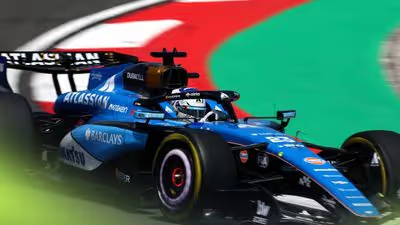
Williams’ FW48 weight problems point to ongoing midfield weakness — punters should avoid backing Williams for podiums and favour markets like Williams to finish outside the top 10 or higher DNF risk early season. If Williams confirms weight-reduction upgrades mid-season, consider late-season each-way bets, but expect poor qualifying and race pace until fixes arrive.
Williams' FW48 Weight Headache: Ex-Drivers Label It F1's Biggest Flop
Allegations of Significant Overweight
Former Williams racers have publicly attacked the team over the FW48’s weight, calling the car a major disappointment for 2026. Technical paperwork shows the car at 772.4kg, 4.4kg above this year’s 768kg minimum, but insiders and former drivers in the Formula 1 suggest the effective performance penalty could be far greater once centre of gravity and energy-harvesting impacts are considered.

How Much Pace Is Being Lost?
Engineers and insiders estimate that excess mass can cost up to around a second per lap on some circuits once braking, cornering and minimum apex speeds are affected. Early-season races underlined Williams’ lack of pace and reliability, with limited points haul and grid positions well adrift of front-running teams.
Race Evidence and Early-Season Results
Williams’ opening rounds delivered underwhelming results. A ninth-place points finish came amid high attrition, and qualifying positions have consistently lagged behind rivals. Late non-starters and retirements in some events masked how much pure race pace the FW48 is missing.
Former Drivers Demand Accountability
Voices from past Williams drivers urged serious consequences. One former driver argued that those responsible for the car’s fundamental flaws should face professional repercussions, insisting engineers and supervisors must accept responsibility for such errors.
Team Response: Fixable but Constrained by Cost Cap
Team leadership acknowledges the problem and says weight reduction is technically straightforward but constrained by the sport’s $215 million budget cap. Planned engineering changes must be timed with component lifecycles and upgrade opportunities, rather than executed immediately, due to cost-cap accounting and homologation windows.
Vowles on Processes and Recovery Plan
Williams’ principal has admitted the overweight outcome reflects shortcomings in internal processes when adapting to major regulation changes. He described the issue as fixable within the season and signalled structural changes to working methods and development pacing to prevent a repeat.
What This Means for the Championship
An overweight FW48 undermines Williams’ ability to contest higher grid slots and extract optimal harvesting and balance.
F1 expected to cancel races in Bahrain, Saudi Arabia due to conflict in Middle East, per reports
Unless upgrades arrive that cut mass and improve the centre of gravity, the team will remain vulnerable in qualifying and races — a reality that reshapes midfield betting markets and intra-season competitor dynamics.
 Planet F1