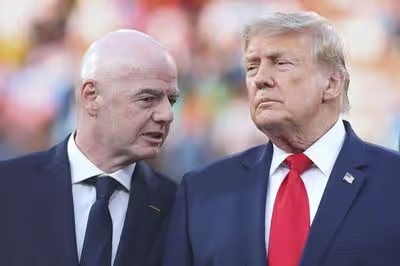
Gianni Infantino unleashed a blistering social-media statement defending FIFA’s handling of the 2026 World Cup, thanking the Trump administration and the three host governments while attacking critics and defending the controversial reversal of Folarin Balogun’s red card. His remarks sharpen the spotlight on FIFA’s relationships with political powers and reopen debate over governance, transparency and consistency in football discipline.
Infantino’s social-media broadside: key lines and tone
Gianni Infantino posted a lengthy statement shortly after the 2026 World Cup, striking a combative tone toward journalists, critics and countries that questioned FIFA’s decisions.
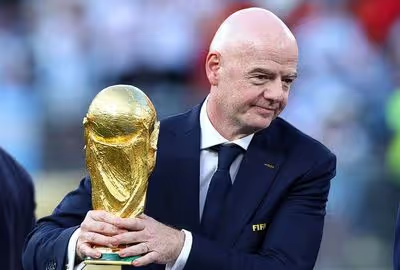
He framed the tournament as a global celebration — praising volunteers, host governments and law enforcement — while accusing detractors of being “consumed by hate and criticism.” Infantino also thanked the U.S., Mexican and Canadian administrations for their roles in staging the event.
Context: what happened at the 2026 World Cup
Spain claimed the 2026 World Cup title with a 1-0 win over Argentina at MetLife Stadium, capping a tournament that delivered memorable moments and high attendance across co-host cities. The event was overshadowed by controversy, notably the reversal of Folarin Balogun’s red card, which allowed the forward to play in the U.S. men’s national team’s Round of 16 defeat to Belgium after intervention and lobbying at high levels.
Balogun decision and political pressure
Infantino defended FIFA’s action to overturn Balogun’s dismissal, arguing such disciplinary reversals are routine in some major leagues — a claim that has been challenged. The dispute has become emblematic of wider concerns about political influence and inconsistent standards in disciplinary rulings. The episode tied the governance of world football to political actors in an unusually visible way.
Why Infantino’s statement matters
Infantino’s combative posture is significant because it reveals how FIFA’s leadership chooses to manage reputational damage: by publicly attacking critics and emphasizing gratitude to political partners. That approach risks deepening mistrust among national associations, media and supporters who expect neutrality and procedural clarity from the sport’s governing body.
Governance and credibility at stake
When the head of football defends controversial decisions by invoking political cooperation and broad-stroke comparisons to “the biggest leagues,” it raises two questions: whether FIFA’s procedures are sufficiently transparent, and whether external influence is shaping sporting outcomes. Those concerns affect perceptions of fairness and can fuel calls for stronger independent oversight.
What this means for stakeholders
Fans and national teams want clear, consistent rules; national governments want successful events; FIFA wants to protect its brand and partnerships. Infantino’s statement attempts to reconcile those aims by celebrating the spectacle while dismissing criticism, but it may not satisfy stakeholders seeking accountability. The tension between spectacle and governance will persist unless FIFA clarifies its disciplinary framework and communication strategy.
What could happen next
Expect heightened scrutiny from federations and the football press, renewed demands for transparent disciplinary protocols, and possible inquiries into decision-making processes around high-profile incidents. FIFA’s next moves — whether procedural reforms, public explanations, or internal reviews — will determine whether Infantino’s combative defense restores confidence or deepens skepticism.
Final analysis
Infantino’s post-match tirade underscores a leadership style that prioritizes control of the narrative and gratitude toward political allies, even at the cost of inflaming criticism. The 2026 World Cup succeeded as a sporting event, but the Balogun reversal and the ensuing rhetoric expose unresolved governance vulnerabilities.
Ranking the Top 10 World Cups: Why 1982 Still Reigns Supreme
For the integrity of global football, the sport’s custodians must back celebration with credible, consistent rules and clearer separation from political intervention.
 The Mirror Us