.jpg-1775168627.webp?w=400&q=70&fit=cover)
Multiple NFL executives at the league meetings expect the Philadelphia Eagles to trade A.J. Brown to the New England Patriots after June 1, when salary-cap mechanics ease. The move would give Brown a fresh start, provide New England with a true No. 1 receiver for Drake Maye, and reduce the Eagles’ dead-cap hit while creating tangible cap savings.
A.J. Brown trade to Patriots looks increasingly likely after June 1
Multiple NFL executives at the recent league meetings signaled that the Philadelphia Eagles will likely move A.J. Brown to the New England Patriots once June 1 arrives and salary-cap math becomes more manageable. The timing matters: post-June accounting can reduce Philadelphia’s dead-cap charge and deliver immediate cap relief.
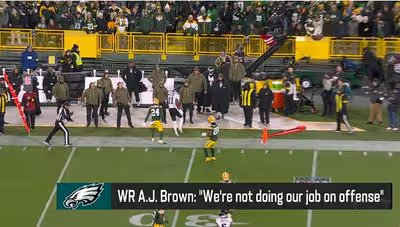
What the timing means for the Eagles
Trading Brown after June 1 is a logical financial move for the Eagles. Doing so would lower the dead-cap burden and produce meaningful savings — a cleaner balance-sheet outcome than a pre-June transaction. For a franchise juggling roster construction and future flexibility, that fiscal clarity is valuable.
Performance and context: why Philly might pull the trigger
Brown’s production has dipped compared with his peak seasons, and the 2025 campaign was peppered with on- and off-field friction. He’s still a playmaker, but the combination of declining consistency and locker-room noise makes mutual separation understandable. From an organizational standpoint, moving a high-profile, expensive receiver can reset chemistry and free resources for upgrades elsewhere.
Why the Patriots make sense as a destination
New England fits the trade narrative on several levels. The Patriots recently added pieces in the receiving room — but still lack a definitive No. 1 target to consistently command coverage and change a game’s trajectory. A.J. Brown provides contested-catch ability, separation skills at the top of routes, and big-play upside that would immediately upgrade the Patriots’ top receiving option.
Coaching familiarity and roster fit
Brown’s previous tenure in Tennessee gives him a working relationship with head coach Mike Vrabel, which smooths integration. For a young quarterback like Drake Maye, pairing elite receiving talent with an established scheme and coach who knows Brown’s strengths could accelerate offensive growth and open play-calling possibilities.
Cap mechanics: the practical driver
The post-June accounting window is the practical catalyst for this rumor. Structuring a trade after June 1 often allows the selling team to spread or reduce the immediate dead-cap hit, a clear incentive for the Eagles. The move would reflect roster management discipline as much as personnel preference.
What this trade would mean short-term and long-term
Short-term: Patriots gain an immediate alpha receiver who can relocate defensive attention and create faster impact for the passing game; Eagles relieve cap pressure and remove an increasingly mismatched contract. Long-term: New England would be betting that Brown’s best play remains ahead of him and that a change of scenery plus familiar coaching can restore his peak efficiency. Philadelphia would get roster flexibility to reinvest in depth or the trenches.
Potential ripple effects and what to watch next
Monitor formal roster moves and salary-cap reporting after June 1. The trade would reshape both teams’ offseason narratives — Patriots as buyers who addressed a clear need, Eagles as a team prioritizing financial and locker-room reset. For A.J. Brown, this is a crossroads: a fresh environment could either reignite his trajectory or confirm a downward trend.
Bottom line
A.J. Brown to the Patriots checks boxes for fit, familiarity with Mike Vrabel, and clear salary-cap logic.
The Jaguars will return to London for two games in 2026
It’s not a foregone conclusion, but the convergence of on-field fit and financial incentive makes a post-June trade a plausible and consequential outcome.
 Sporting News